This
is a camera for SL film cartridges, a format for ordinary 35mm film in
easy to load cartrdges.
Photography on 35-mm cinema film started in 1925 with the Leica. Photographers bought bulk film and filled
special cartridges with it. There was no cartridge standard yet. Kodak finally created
in 1934 the film type 135 cartridge, which did not become common until after 1945.
So Agfa's older
35 mm cameras used their own cartridges. They first built the Agfa Memo
with the Ansco Memo
cartridge system from 1927, but then developed a similar cartridge on
their own. The camera was called Karat and the cartridges were marketed
under this name. As a film manufacturer, Agfa supplied its Karat film
ready-made, in sheet metal cartridges without a core. A bit of the film
stuck
out of the cartridge which had to be dropped into the camera and
advanced. It slid automatically into an identical take-up cartridge
which was removed when all photos were taken. The previous supply
cartridge was then used as a take-up cartridge. The cartridges
contained film for 12 exposures
in ordinary 24 × 36 mm format. After WW II the 135 cartridge became
common, so Karat film was no longer made.
Prior to the introduction of the Eastern SL system (Schnell-Lade
= Rapid Load), the Dresden Pentacon camera company was the first
to
seek a licence from Agfa for their old Karat system in the late mid
1950s, but did not succeed.
Then the Wolfen (ORWO) film company, formerly an Agfa company, tried to
get a license which was refused as well. So in 1958 they decided to
develop their own system. As they had produced Karat film
cartridges before the WWII, they adapted this system.
The SL cassettes match the size of the Karat, but they were made almost entirely
of plastic and contained
around 0.56 m of 35 mm film. There were the
black-and-white films NP 15, NP 20, NP 22 and NP 27, the daylight
slide films Orwochrom UT 18 and UT 20, the colour reversal film
Orwochrom UK 17 and the colour negative film NC 19. At
the same time the USSR camera industry wanted to launch several simple
camera models with a rapid load system. The ORWO company was ordered to
furnish the film for the Russian cameras. So the Eastern German and the
Russian camera industry had their SL cartridge system for many years to
come. There were cameras for different
formats: 24 × 36 mm (12 exp), 24 × 24 mm (16 exp.) or 18 × 24
mm (24 exp.).
When in 1963 Kodak launched the
Instamatic system, whose cassettes was protected by several patents,
Agfa was unable to develop a comparable system on a short term. So they
re-released the Agfa Karat cartridges slightly modified
under the name Rapid. The innovation was a nose on the cartridge for
sensing the film speed. Like the Karat, the Rapid cartridge had no
core. The film tab was cut straight and specially embossed to
create a twist with which it was supposed to thread itself reliably
into the receiving cartridge. Because it could happen that the film
type and the label on
the cartridge did not match, the end of the film was labelled, which
was done by small punched holes that formed letters. There was also an
indication that exposure had already been done. Today the cartridges
still can be reloaded easily and Rapid cartridges even fit into Karat
cameras, as do the SL cartridges.
The Wolfen (ORWO) film company later tried again to get a license from Kodak or Agfa for their new systems, but again did not succeed. After
years of negotiations they gave up and stayed with the SL system.
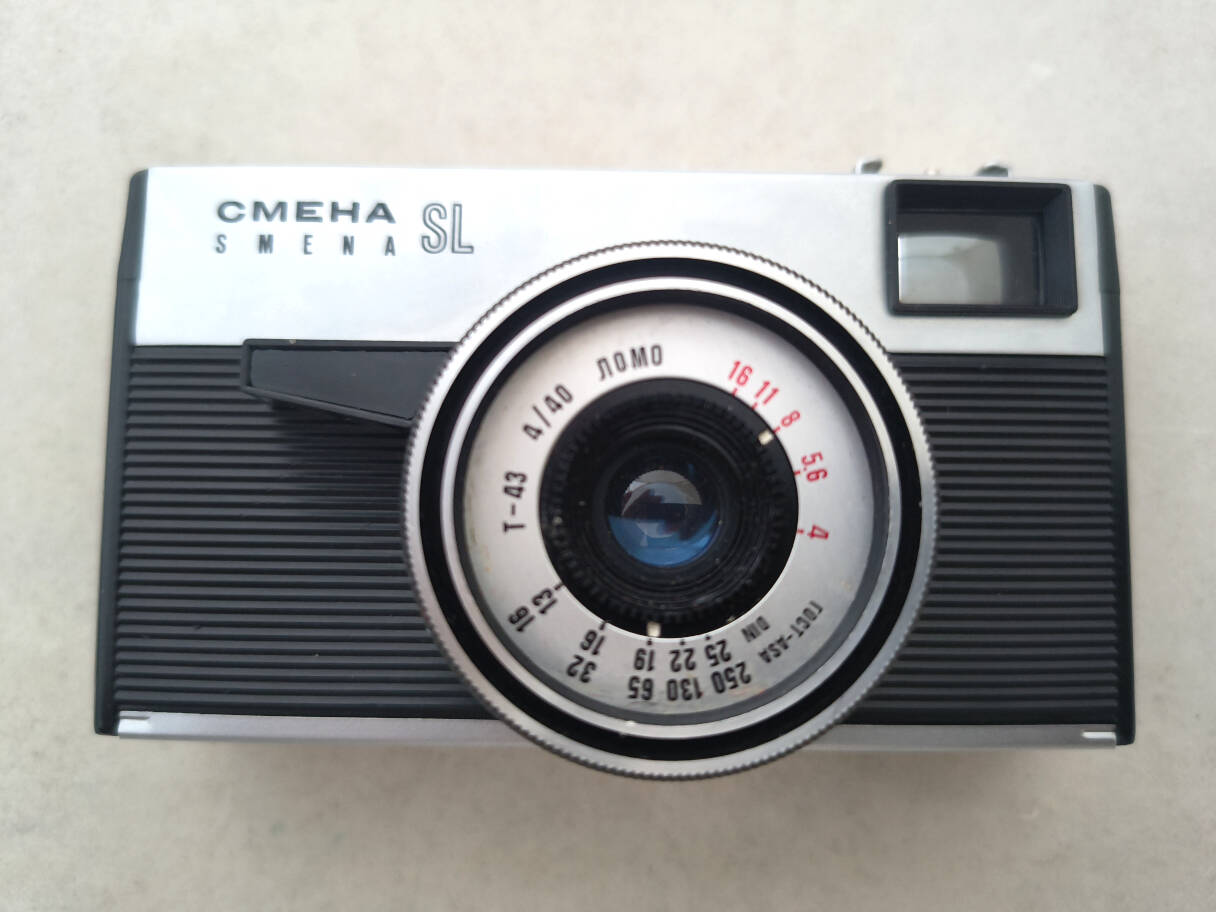
The Smena SL was launched by the LOMO factory in 1968 and stayed in
production until 1977. LOMO already had used the Smena name for simple
cameras before WWII and after. Smena in Russian means symbol and that's
how the cameras work: setting via simple symbols. Cameras are marked
Smena SL in latin script, in cyrillic it's Смена SL. It uses a
symbol-aided zone focusing and a very simple exposure system. There are
Smena cameras which are almost identical for ordinary 135 film which do
not have SL in their name.
The camera's main features are:
Lomo T-43 40mm, triplet lens, F4 - F16, closest focus 1m Shutter Speeds 1/250 - 1/15 s, B PC socket, Size: 120x 70 x 60 mm, Weight : 380 g
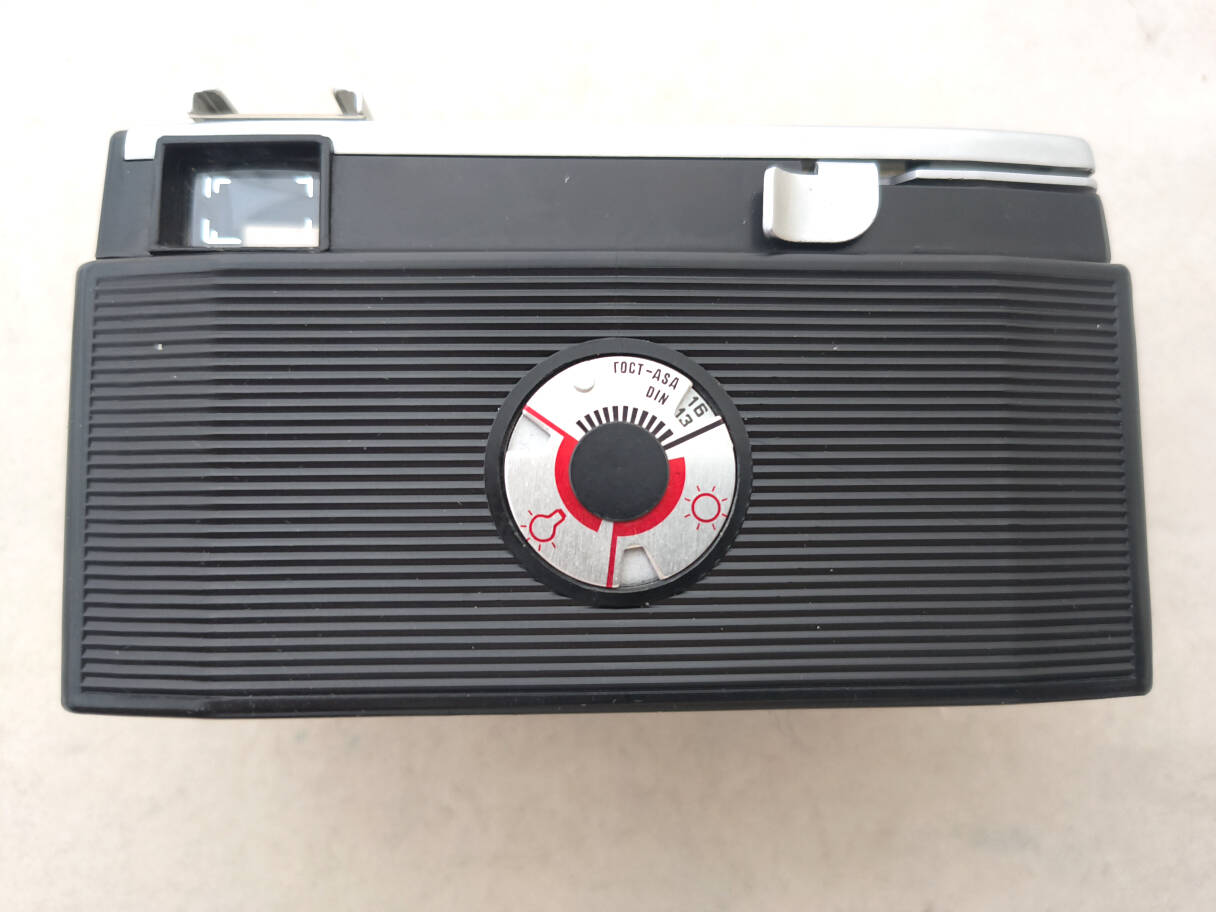
Front. Big finder. Big Shutter release lever. On the lens: aperture or film speed setting. Back
view. Film type reminder. Advance lever. Camera
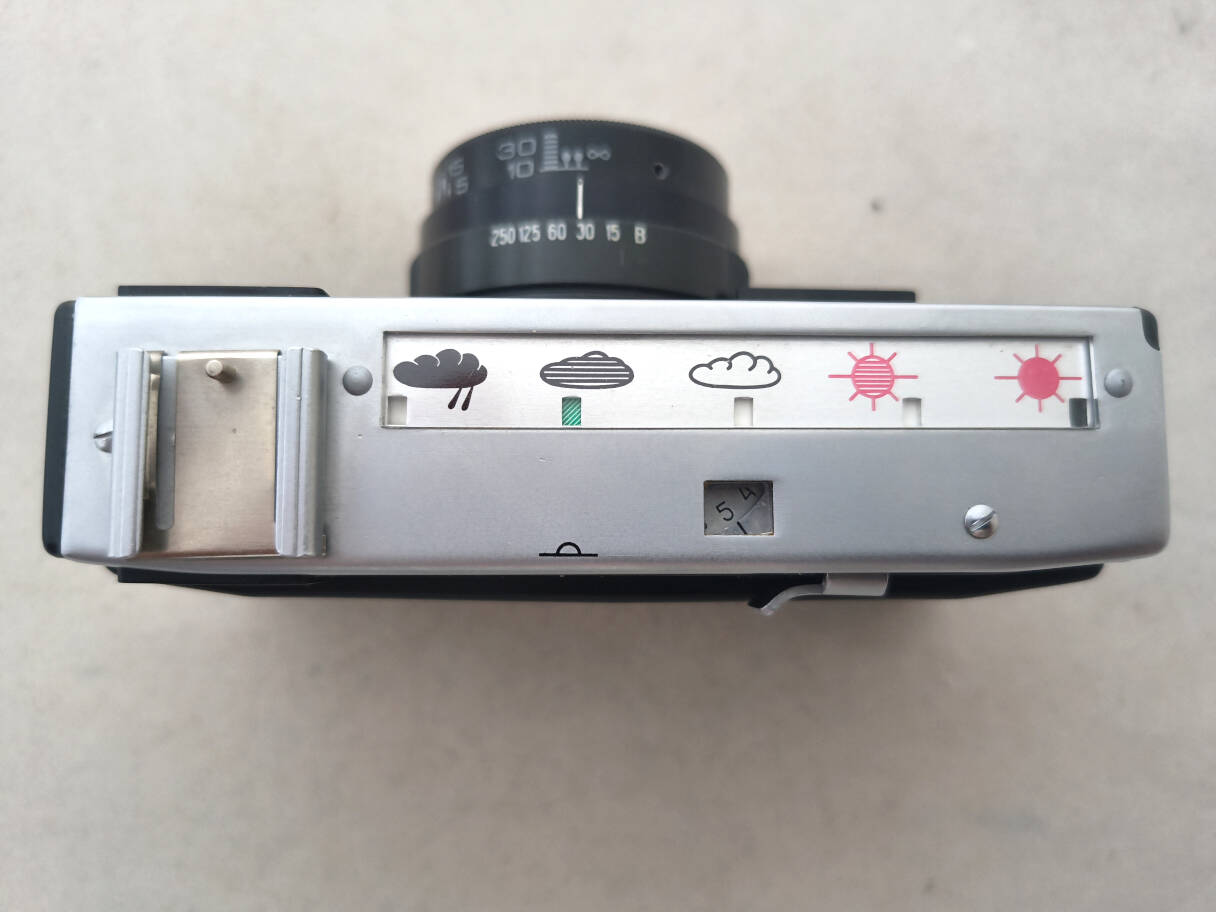
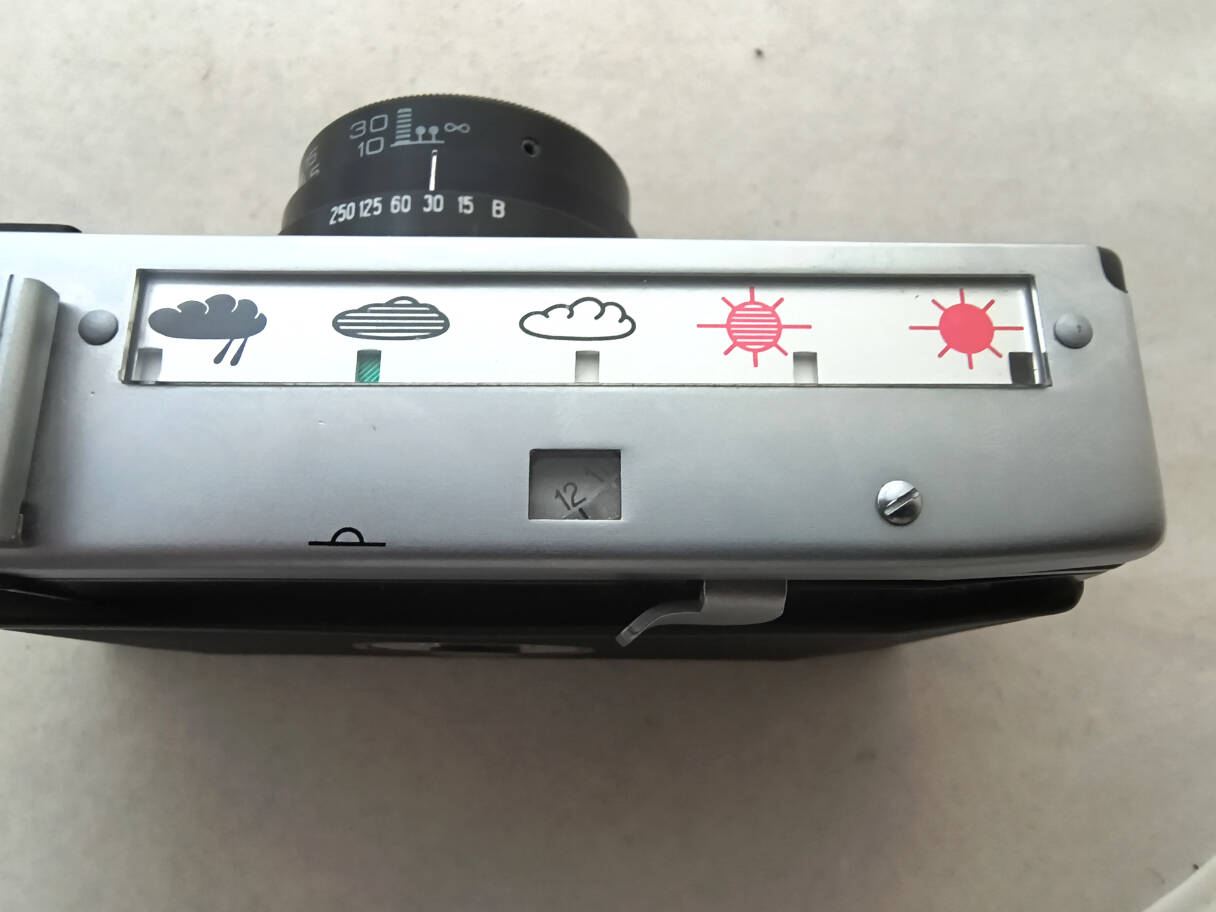
top. Cold shoe, film counter and simple exposure system via
symbols. On the lens barrel: Speed setting and focus
setting via symbols and distance indications.
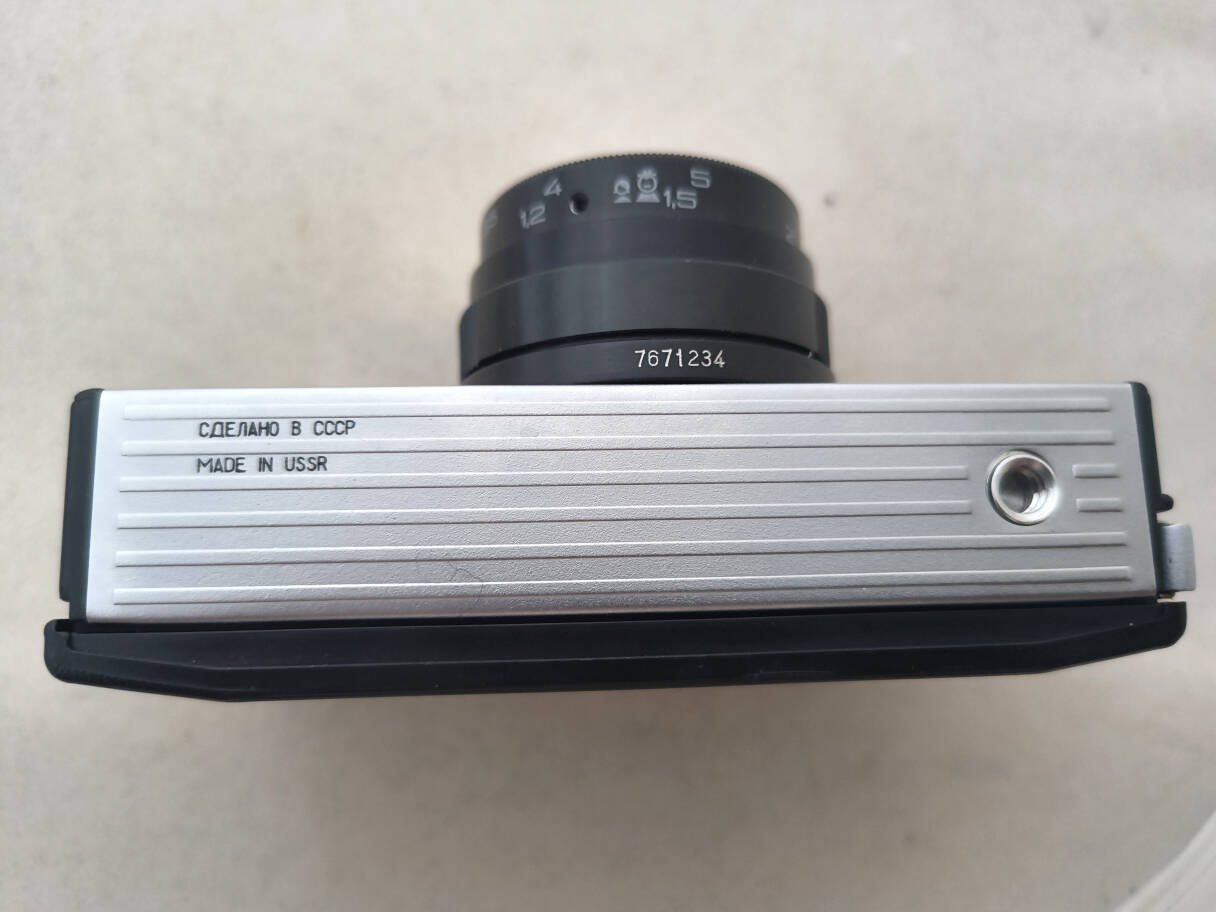
Just a tripod socket.
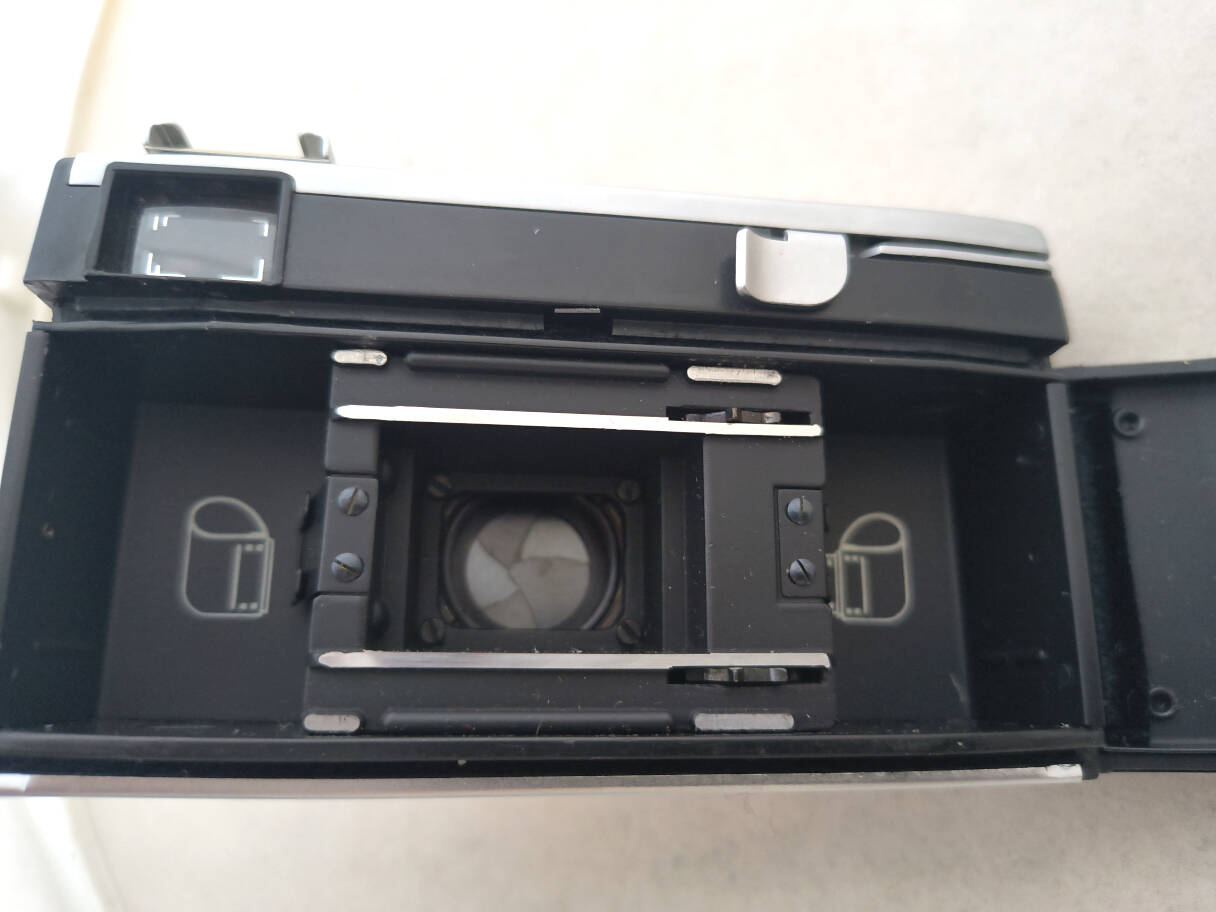
Film compartment wihout cartridges
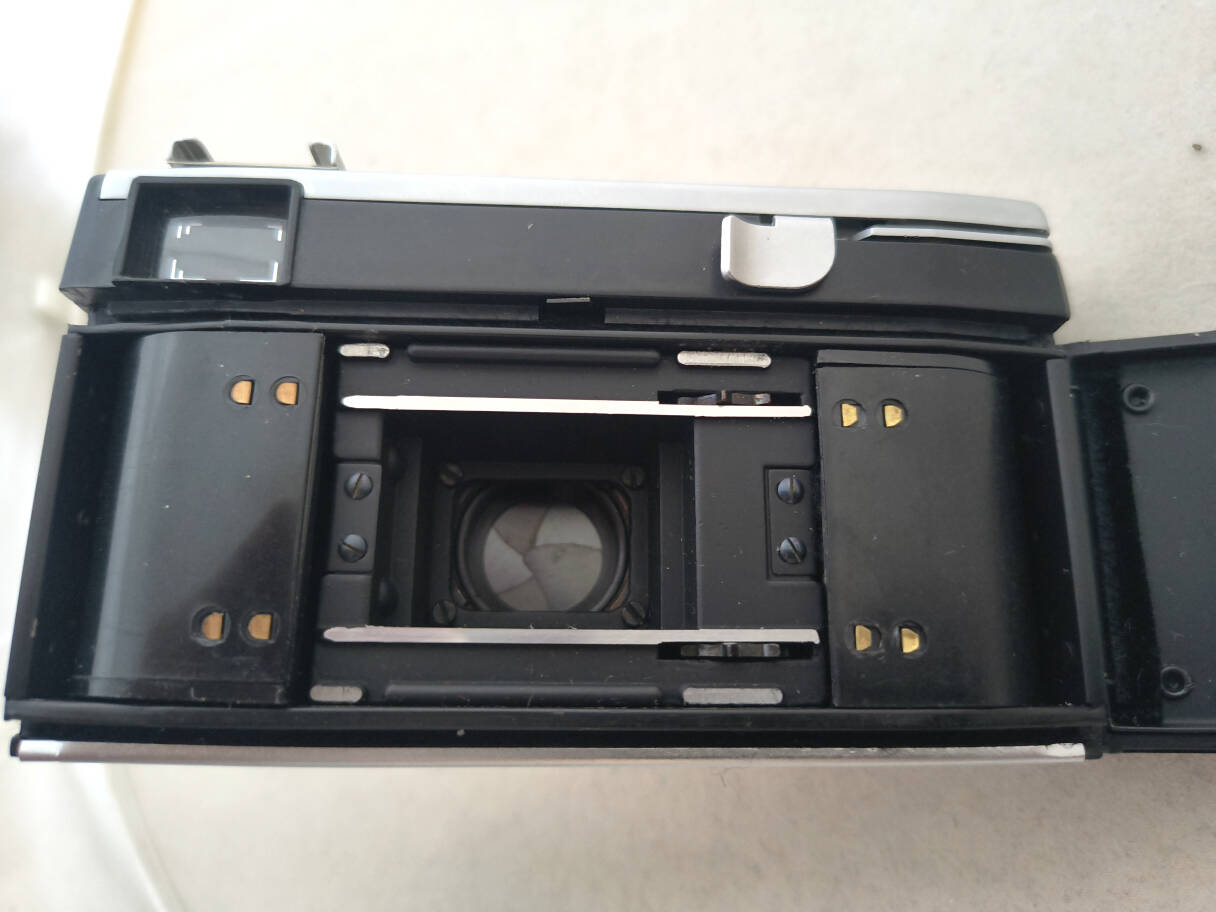
Film compartment open and cartridges. The feeding side is to be put to the right.
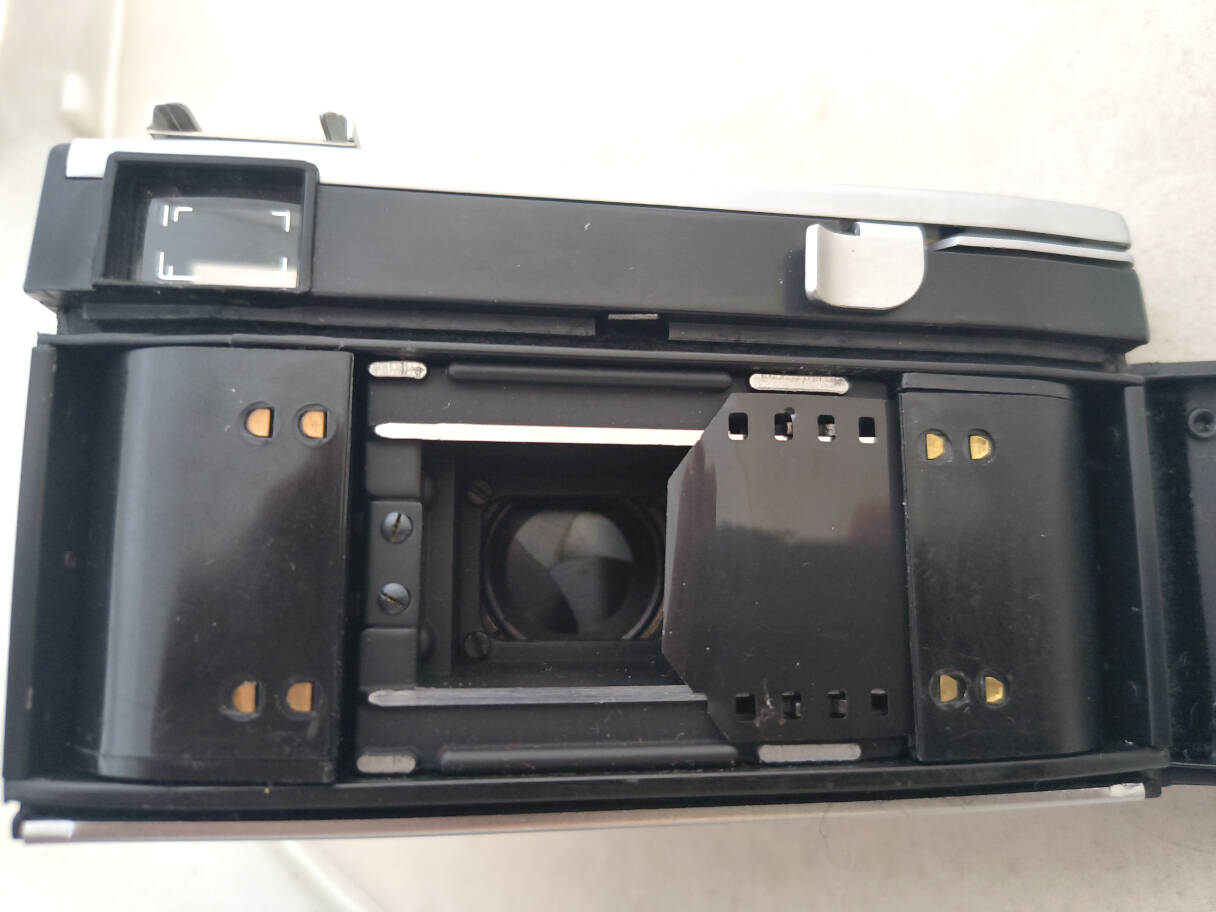
Camera
back and film plane open, feeding cartridge with film installed. You
have to pull about 2 cm of film and put the sprockets over the advance
wheel. Then close the back.
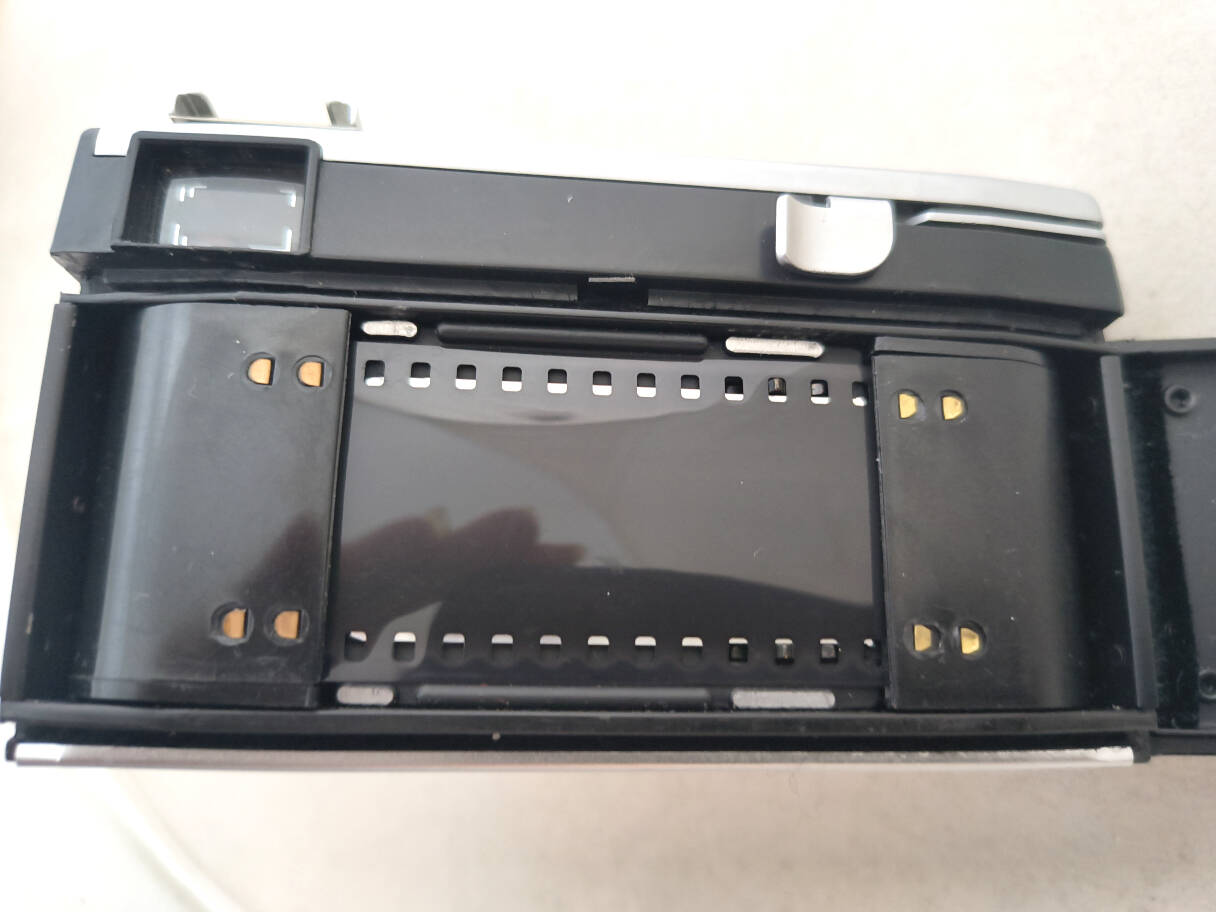
Film advanced automatically into the receiving cartridge (2x advance and shutter release).
The camera only counts to 12. After the 12th foto you should advance
twice to feed the last photo into the receiving cartridge before
opening the back.
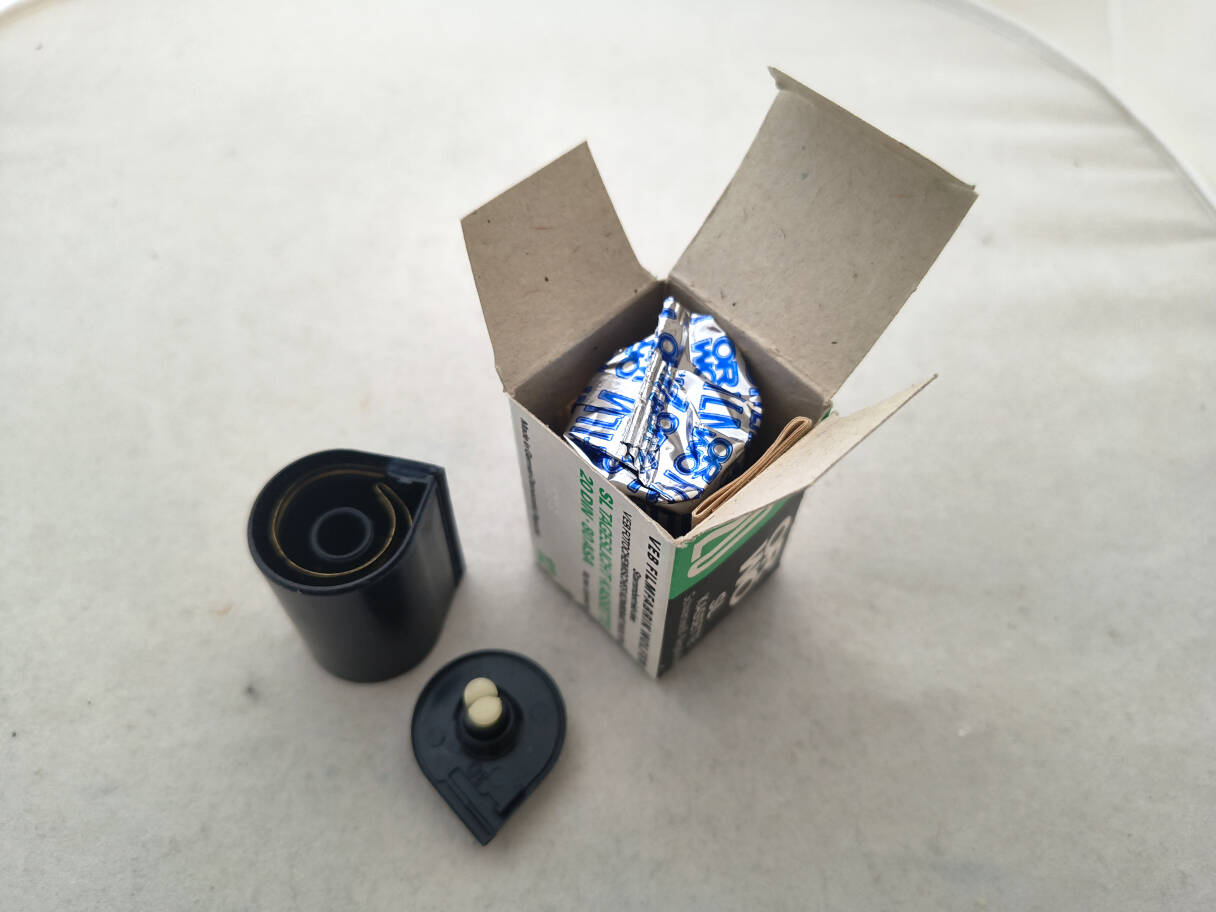
An open cartridge (to open, look for the seam and pry with a fingernail) and a sealed ORWO SL film, expired by decades,
The
camera is easy to use,
just drop the cartridge into its compartment, make sure that at least
2cm of the film are on the film plane, close the camera, advance to the
first photo and that's
it. Then you have to decide whether you use a meter or the camera
simplified exposure system. If you use a meter, set speed and aperture
as usual.
If you use the simplified (and a bit random) exposure system, set the
ISO on the lens. Then look at the top of the camera and decide the
exposure situation via the symbols. Turning the speed setting moves the
indications. In both cases set the distance either via the symbols or
your distance estimations in metres. Press the shutter to take your
photo.
Action the advance lever for the next photo.
As there are no slow speeds,
there are limits in low light. However there is a B setting for night
photos. The simplified exposure system really works with modern film.
The lens is fine,
so pictures were very good.
The only problem is film supply. You need 2 cartridges to get your
camera working. There is still largely expired ORWO SL film for
reasonable prices. The film itself might be hardly usable, but you can
buy 2 films and there you are with the necessary cartridges. As
mentioned above, the strips should be 56cm long. So you can use 12 exp
film, 24 exp film which gives just 2 strips or 36 exp film which
doesn't give 3 strips, but 2 longer ones or 2 normal ones and a shorter
one of 8-10 exp.
Cutting and feeding has to be done in absolute darkness or in a sleeve.
Prepare a measure strip of 56cm, a cartridge, scissors and your film to
be fed. Cut the smaller part of the film leader, clip the edges, Then,
in absolute darkness or a sleeve,
unroll the length of your strip. Feed the strip into your
cartridge. Done. Keep the rest of a 24 exp film in its original
cartridge for the next time. Do not forget to clip the edges again or
your film might jam. With 36 exp film you can also cut 2 strips of a
bit
more than 70 cm. In this case you can advance further after the 12th
photo, but there is no counting. And you have to advance cautiously not
to jam your film.
If you do not cut too close to the end of the original 135 cartridge or
canister, you can use it for processing in an ordinary lab. Return to
the dark or your sleeve with a strip of adhesive tape and tape your
exposed film to the film bit still hanging out of your 135 film
canister. Then respool slowly and give it to your lab.
When you have taken your photos, advance 2 more times. Good luck and have fun!
There are other SL cameras as the Pentis and other East German and also Russian cameras.